Sealed: We take over existing WinForms or WPF software, read the source, and modernise the parts that cost you money. A staged migration is the usual path, with the old build still running while the new one proves itself. Windows Forms is still part of .NET development on Windows.
On this page
- The bench
- The stacks
- Packaging
- Handover
Proof first, then the milled hairline.
Elmhurst Enterprises is a PC application development studio working from 8 Mill Lane in Calcot, Reading. We build Windows-first desktop software for UK businesses: internal tools, line-of-business applications, utilities, and products that need to ship as a real installable program rather than a browser tab.
What we actually do all day
A desktop program somebody depends on.
A quoting tool for a sales team in Basingstoke. A data-collection utility that runs on rugged tablets in a warehouse. A reporting client that pulls from an internal database and has to behave when the network drops. These are not glamorous programs. They are the ones people notice only when they stop working.
We write C# and XAML for Windows, package the result properly, and leave a build that a colleague can repeat without us in the room. If your project is genuinely better as a web app, we will say so in the first conversation, because a desktop program that should have been a website is an expensive kind of wrong.
Which framework, and why
Windows-first, and honest about the alternatives
Microsoft's current guidance points new Windows-only apps at WinUI 3, part of the Windows App SDK. For line-of-business systems with a long life, WPF is still a valid path and Microsoft continues to reference it for enterprise desktop work. .NET MAUI compiles C# and XAML to Windows, macOS, Android and iOS when a team needs one codebase across desktop and mobile. Electron bundles Chromium and Node.js so web developers can ship a desktop program quickly, at the cost of a heavier footprint.
Microsoft's current guidance for a new Windows-only desktop application. Part of the Windows App SDK, so it moves with the platform rather than beside it.
Still a valid path for line-of-business systems with a long life. Microsoft continues to reference WPF for enterprise desktop work, and it stays steady where the tooling has matured.
Compiles C# and XAML to Windows, macOS, Android and iOS when a team needs one codebase across desktop and mobile and can accept the shared surface.
Bundles Chromium and Node.js so web developers can ship a desktop program quickly, at the cost of a heavier footprint on the machine.
None of these is the right answer in the abstract. The right answer depends on who will maintain the thing in three years, what hardware it must run on, and whether your users need macOS and Linux or only Windows. Our Technologies page sets out the trade-offs properly rather than picking a favourite.
Modernising and packaging
Four things we will not hand over unproven.
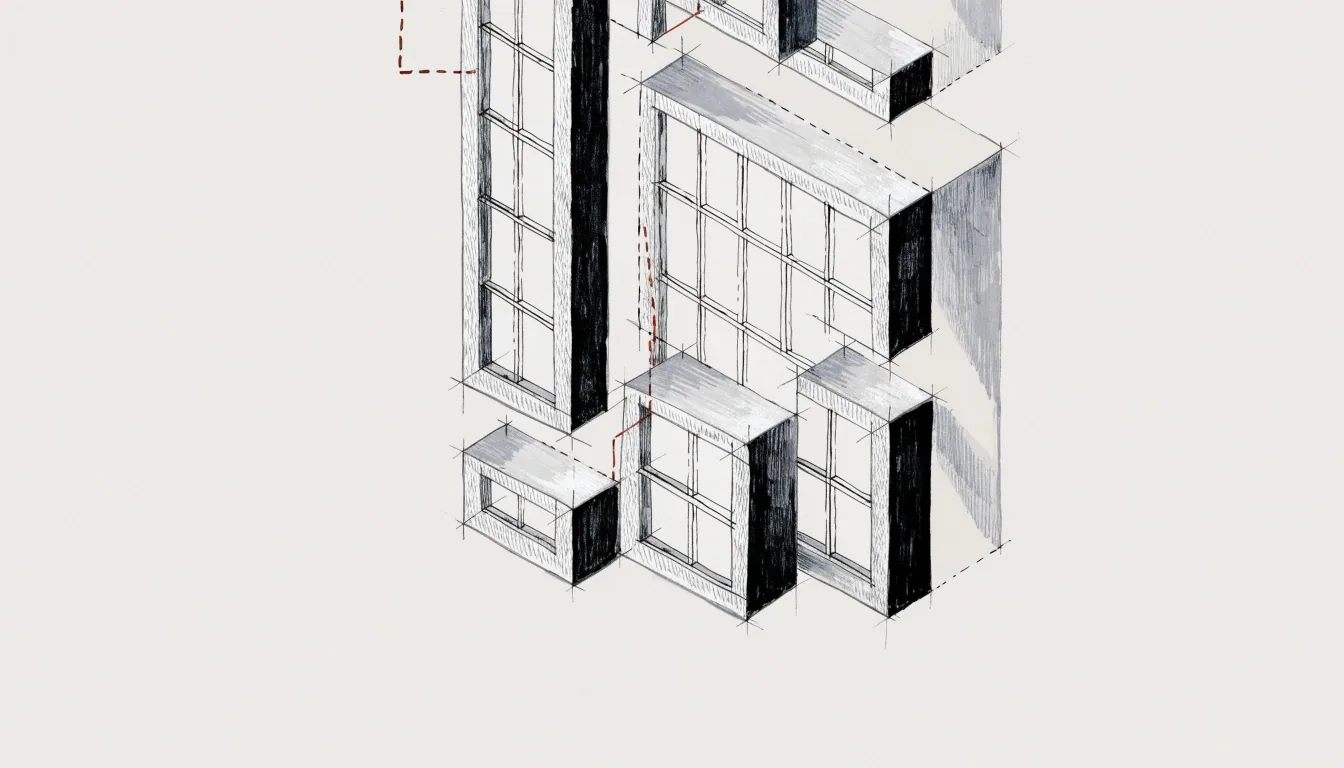
Each row below is a part of every project. Where the line runs solid, the part is a sealed commitment we carry by default. Where the line breaks, it is a configurable item that depends on your setup.
Sealed: MSIX packaging and Windows code signing run through every project, not as a bolt-on at the end. It handles installation, updates and clean removal in a way a zip file and a shortcut never will, and it is what your IT team deploys through Intune or a similar tool.
Sealed: No phase ends with only a document. Every stage of a staged modernisation delivers something usable and tested on real hardware before it is called done, and a new utility can go from scope to a testable build in a few weeks.
Configurable: Windows ML and Foundry Local are both on the table when an application needs to run inference on the device itself. Whether that suits your project depends on the hardware floor, the update story and your privacy position — a conversation, not a checkbox.
What a handover looks like
Packaging is part of the product, not a step after it.
Handed over with the notes to repeat it
A signed MSIX package and a folded scope, a colleague who can rebuild the thing without us in the room. We do not hand over a build without the notes to repeat it, and we do not take on work we think should be done differently without saying so first, in writing, before you have spent anything. That last one costs us projects occasionally. It is also why clients come back with the second one.
Runtime
C# and XAML, on .NET for Windows
The stack we work in daily, chosen because it is the one your next developer is most likely to be able to read.
Output
An installable program, not a tab
Windows-first is the default. When macOS or Linux is the real requirement, .NET MAUI and Electron are on the table.
Distribution
MSIX, signed, through Intune
For managed devices, deployment is the difference between an afternoon and a fortnight.
Where we work
Calcot, Reading — delivered UK-wide
Leeds, Glasgow, Bristol and Belfast without anyone getting on a train unnecessarily. Meet in person when it helps.

How a project starts
Five steps from the first call to a build you can run.
Scope comes before price here. No phase ends with only a document, and a delivery date is never promised before we have seen the code.
First conversation
We look at what exists, what has to change, and what can stay. If it is an existing application, we will want to run it. If a web app is the honest answer, you hear that here.
Deliverable · a plain-language read on the shape
Written scope
The work in plain language, the parts of the system we would touch, and what we need from you to begin.
Deliverable · a scoped document
Build
C# and XAML on Windows, packaged properly and tested on real hardware rather than on a developer's machine alone.
Deliverable · a testable build
Seal
MSIX packaging and signing for the machines you do not control, so installation, updates and removal behave the way your IT team expects.
Deliverable · a signed package
Handover
The build, the notes to repeat it, and a colleague who can pick it up without us in the room for the next change.
Deliverable · a repeatable source build
A new utility might go from scope to a testable build in a few weeks. A staged modernisation of a line-of-business system runs in phases across months, with something usable at the end of each one. What we commit to is a scoped piece of work, described before it starts, tested on real hardware before it is called done.
8 Mill Lane, Calcot, Reading — most of the work delivered remotely.
Choosing a partner for a desktop build
There is no shortage of people who will write you a Windows application.
The differences show up later: whether the installer works on a locked-down machine, whether the source is readable by the next developer, whether the app handles a machine that has been asleep for six hours. Ask any studio those questions before you sign. Ask us them too. The answers matter more than the portfolio.
We work best with UK businesses that have a specific problem and a named person who owns it. A manufacturer with a scheduling tool nobody dares touch. A professional services firm that needs a document assembly client. A software company that has a Windows product and needs a second pair of hands on the native side. We are less useful to someone shopping for the cheapest possible quote on an unspecified idea.
Before you call
The questions we get asked most.
Short answers to the ones that decide whether a conversation is worth your time. If yours is not here, ask it directly.
Do you only build Windows applications?
Windows-first is the default because that is where most UK business desktop software lives. We do build cross-platform when there is a real reason for it, and .NET MAUI or Electron are both on the table for those projects. The Technologies page explains when each makes sense.
Can you take over an existing application from another developer?
Yes, and it is a large part of what we do. We will want to run the software, read the source, and understand what the current users rely on before proposing anything. Legacy modernisation usually starts with a short assessment rather than a rewrite.
How do you handle installation for managed devices?
MSIX packaging and signing run through projects by default. For organisations that deploy through Intune or a similar tool, that means the app installs and updates the way their IT team expects, and removes cleanly when it is retired.
Do you use AI tools in desktop apps?
Where it fits, and on the device rather than only in the cloud. Microsoft's guidance now includes Windows ML and Foundry Local for local inference scenarios. Whether that suits your project depends on hardware and data sensitivity, which is a conversation rather than a checkbox.
Where are you based?
8 Mill Lane, Calcot, Reading, England. Most project work is delivered remotely, and we have done so with clients across the UK. The address is on the contact page because a business should be findable, not because we expect you to visit.
The workshop
Elmhurst Enterprises
8 Mill LaneCalcot, Reading
England
Monday to Friday, 9:00 AM – 6:00 PM
Where to go next
Start a conversation
Write to us with what you have, what has to change, and what can stay. We reply in the working week.
[email protected]Or call the studio on +44 118 425 2191 during working hours.
Elmhurst Enterprises · elmhurstenterprises.digital · PC application development, Calcot, Reading